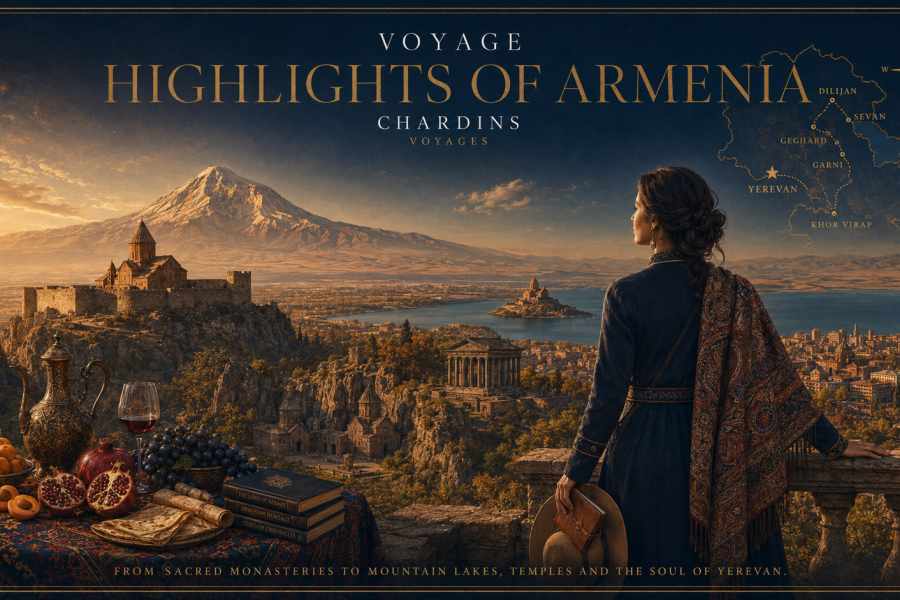
A civilisation written in stone
Monasteries, churches, fortresses and khachkars give Armenia a visual language in which landscape and architecture are almost inseparable.


A highland country of volcanic valleys, ancient monasteries, old vineyards and cities built in warm tuff stone. Armenia rewards travellers who look beyond monuments and discover the layers of memory, craft, food and hospitality that surround them.
Armenia occupies a high plateau between the Caucasus and the great routes of the Near East. The country is compact, but its landscapes change quickly: dry volcanic valleys, forested northern mountains, the blue expanse of Lake Sevan and deep southern gorges where monasteries appear almost fused with the rock.
Its cultural continuity is equally striking. Early Christian architecture, khachkars, manuscript traditions, village kitchens, contemporary design and a renewed wine culture coexist in a country where history is not confined to museums. Much of Armenia is understood best through people: over coffee, lavash, wine and the kind of conversation that turns a stop into an encounter.
Monasteries, churches, fortresses and khachkars give Armenia a visual language in which landscape and architecture are almost inseparable.
Volcanic plateaus, mountain passes, forested valleys and Lake Sevan make altitude a constant presence in an Armenian journey.
The Areni valley carries one of the world’s oldest winemaking stories, while today’s producers are giving indigenous grapes a new voice.
Bread, herbs, cheeses, preserves, ceramics, textiles and family recipes turn Armenian hospitality into something tactile, personal and deeply local.
Armenia’s distances are manageable, but every direction changes the mood — from urban Yerevan to forests, high lakes, vineyard valleys and the dramatic south.
Armenia is most rewarding when the itinerary leaves room for village roads, workshops, family tables and places whose significance only becomes clear with context.
Jean Chardin travelled through the South Caucasus on his journeys between Europe and Persia. The roads, borders and empires have changed, but the instinct behind that kind of travel remains relevant: look closely, stay curious, and allow a place to reveal itself through people as much as monuments.
That is how we approach Armenia. Not as a sequence of churches and viewpoints, but as a living landscape in which architecture, food, craft, belief and family memory continually overlap.
There is no single “best” month: the right season depends on whether the journey is built around heritage, wine, mountain landscapes, food or a combination of all four.
Green valleys, comfortable days and clear mountain light make spring particularly rewarding for heritage, walking and cultural journeys.
Long daylight opens highland roads, Lake Sevan and mountain landscapes, while Yerevan takes on its energetic summer rhythm.
Harvest, golden light and cooler evenings make autumn one of the strongest periods for wine, food and journeys through Vayots Dzor.
A quieter Armenia, with snow in the highlands, winter food, crisp urban days and a more intimate atmosphere in Yerevan and the countryside.
Tell us what draws you here — ancient architecture, wine, landscapes, food or simply curiosity — and we will shape the journey around it.
Start a Conversation →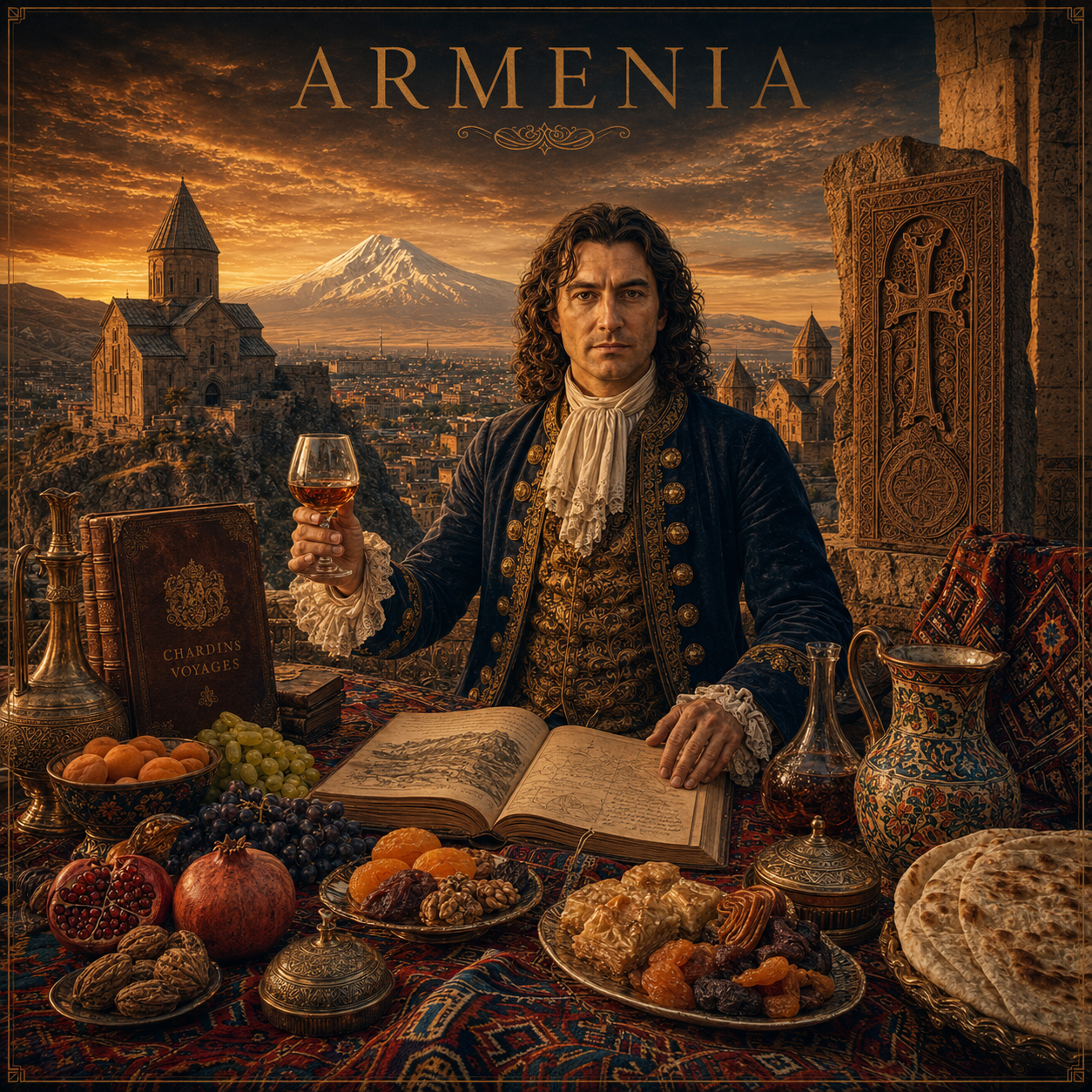
Subscribe to see secret deals prices drop the moment you sign up!